- Have any questions?
- info@conceptsandcareers.com


Helium: The People’s Network That Tried to Decentralize Telecom

Mastering Disruption: A Strategic Playbook for Thriving in an Era of Constant Change
April 14, 2026
Decoding Consumer Minds: A Strategic Deep Dive into “The Psychology of Marketing” by Harinder Singh Pelia
April 22, 2026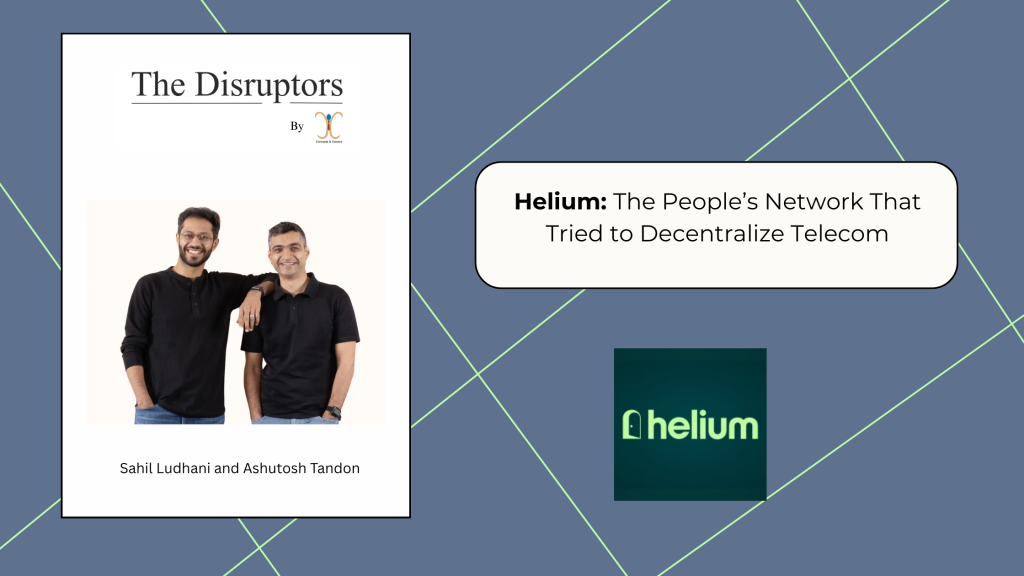
🚀 Introduction: The $3 Trillion Industry Nobody Questions
Telecom is one of the most powerful industries in the world.
- Controlled by a few corporations
- Capital-intensive (cell towers, spectrum, infra)
- Slow to innovate
And yet, it powers everything:
👉 Internet
👉 Mobile communication
👉 IoT
But what if…
👉 Instead of telecom companies building networks
👉 People built them themselves
That’s the radical idea behind Helium.
🧠 What is Helium?
Helium Network is a blockchain-powered wireless network that allows individuals to build and operate connectivity infrastructure.
At its core:
- Users deploy devices called Hotspots
- These hotspots provide wireless coverage
- Participants earn HNT (Helium Token) as rewards
👉 In simple terms:
You become the telecom provider
Helium connects:
- IoT devices (via LoRaWAN)
- Mobile devices (via Wi-Fi / 5G evolution)
🔍 The Product Lens: Infrastructure as a Community
1. From Cell Towers → Hotspots
Traditional telecom:
- Billion-dollar towers
- Centralized ownership
Helium flips this:
👉 Small, low-power devices replace towers
- Anyone can install a hotspot
- Coverage expands organically
- Network grows with participation
Helium describes this as:
👉 “The People’s Network”
2. Crypto Incentives: The Masterstroke
Helium solved a massive problem:
👉 Why would anyone build infrastructure for free?
Answer:
👉 Incentivize them with crypto
- Users earn HNT tokens
- Rewards based on usage and coverage
- More devices → more value
This model:
👉 Crowdsources infrastructure creation at scale
3. DePIN: A New Category is Born
Helium is one of the earliest examples of:
👉 DePIN (Decentralized Physical Infrastructure Networks)
Where:
- Blockchain meets real-world infrastructure
- Ownership becomes distributed
- Incentives align globally
This is bigger than Helium:
👉 It’s a new economic model for infrastructure
🌐 The Market Perspective: Why This Matters
1. Explosion of IoT Devices
From:
- Smart agriculture sensors
- Logistics tracking
- Smart cities
👉 All need low-cost connectivity
Helium enables:
- Cheap, long-range wireless
- Scalable deployment
2. Telecom Inefficiency
Building telecom infra traditionally:
- Takes years
- Costs billions
Helium:
- Scales in months
- Costs distributed across users
3. Ownership Shift
From:
- Corporate-owned networks
To:
- Community-owned infrastructure
👉 This is a philosophical shift, not just technological
🧑💼 The VC Perspective: Why Investors Bet Big
Helium raised $200 million and reached unicorn status.
Why it attracted capital:
1. Massive Market
Telecom = multi-trillion dollar industry
2. Real Utility in Web3
Unlike speculative crypto:
👉 Helium connects real devices
👉 Generates real-world value
3. Scalable Network Effects
More hotspots → better coverage → more usage → more rewards
⚙️ Business Model: How Helium Works
Supply Side:
- Individuals deploy hotspots
- Earn HNT tokens
Demand Side:
- Businesses use network for IoT
- Pay using data credits (converted from HNT)
Tokenomics:
- HNT is burned when network is used
- Rewards distributed for participation
👉 This creates a closed economic loop
⚔️ Competitive Landscape
| Player | Model | Limitation |
|---|---|---|
| Telecom Giants | Centralized infra | High cost |
| ISPs | Limited reach | Infrastructure heavy |
| Helium | Decentralized network | Adoption challenges |
👉 Helium’s moat:
Community + incentives + infrastructure
⚠️ The Reality Check: Where Helium Struggled
No disruptor story is complete without truth.
1. Token Economics Pressure
- Rewards decreased over time
- Early adopters benefited most
2. Real Usage vs Speculation Gap
- Many hotspots deployed
- Limited actual IoT usage in some regions
3. Complexity of Setup
- Not truly plug-and-play
- Requires technical understanding
4. Regulatory & Trust Challenges
- Scrutiny over partnerships
- SEC-related issues (later resolved)
🔄 Strategic Pivot: Evolution of Helium
Helium didn’t stay static.
It evolved:
- From IoT → 5G → Wi-Fi offload
- Migrated to Solana blockchain
- Introduced Helium Mobile
👉 This shows:
Adaptability is key in disruptive systems
🧠 The Strategic Insight Most People Miss
Helium is not about crypto.
It is about:
👉 Who owns infrastructure
And that question extends to:
- Energy
- Internet
- Mobility
🔮 Future Vision: If Helium Succeeds
Imagine a world where:
- Internet is community-owned
- Connectivity is cheaper
- Infrastructure scales organically
👉 That’s the Helium vision
But even if Helium itself doesn’t dominate:
👉 The DePIN model will
🧠 Final Take: Why Helium is a True Disruptor
Helium didn’t just challenge telecom.
It challenged:
👉 Ownership
👉 Incentives
👉 Infrastructure economics
From a Disruptors lens:
- It turned users into providers
- It turned crypto into utility
- It turned infrastructure into a network effect
And most importantly:
👉 It proved that the next generation of infrastructure may not be built by companies… but by communities