- Have any questions?
- info@conceptsandcareers.com


Power, Strategy, and Human Nature: A Deep Dive into The 48 Laws of Power by Robert Greene

Ctruh: Building the Infrastructure for the Spatial Internet and the Future of Commerce
April 30, 2026
Vobiz.ai: The Invisible Infrastructure Powering the Rise of AI Voice Agents
May 6, 2026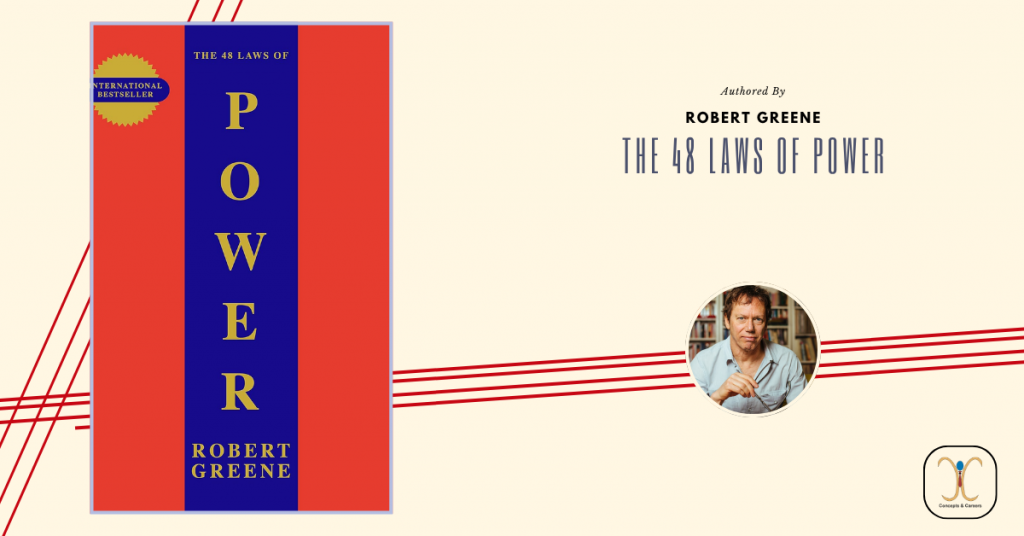
Comprehensive Analysis and Summary of The 48 Laws of Power by Robert Greene
Few modern books have sparked as much fascination, debate, and controversy as The 48 Laws of Power by Robert Greene. Drawing from centuries of history, politics, warfare, and human behavior, Greene distills recurring patterns of influence into 48 laws—each designed to help individuals understand, navigate, and wield power in complex social environments.
This is not a moral guidebook. It is a realist’s manual—one that examines how power actually operates beneath the surface of society, organizations, and relationships.
1. The Core Premise: Power is a Game of Perception and Strategy
At its foundation, The 48 Laws of Power argues that:
👉 Power is not just about authority or position—it is about control over perception, influence, and outcomes.
Greene emphasizes that:
- People are driven by ego, fear, desire, and status
- Social interactions are layered with hidden motives
- Those who understand these dynamics gain advantage
This perspective aligns closely with insights from Behavioral Psychology, where subconscious drivers shape actions more than logic.
2. The Nature of Power: Subtle, Strategic, and Situational
Greene presents power as:
- Indirect rather than obvious
- Strategic rather than reactive
- Context-dependent rather than fixed
Power is rarely exercised through force alone. Instead, it is:
✔ Managed through positioning
✔ Amplified through perception
✔ Sustained through control of narratives
3. Key Laws and Their Strategic Meaning
While all 48 laws offer insights, several stand out for their universal relevance:
Law 1: Never Outshine the Master
Always make those above you feel superior.
👉 Insight:
Ego management is critical in hierarchies.
Law 3: Conceal Your Intentions
Keep others guessing to maintain advantage.
👉 Insight:
Transparency is not always strategic—timing matters.
Law 6: Court Attention at All Costs
Visibility equals power.
👉 Insight:
In today’s digital world, attention is currency.
Law 15: Crush Your Enemy Totally
Partial wins can create future threats.
👉 Insight:
In business, incomplete strategies often backfire.
Law 33: Discover Each Man’s Thumbscrew
Understand what motivates people.
👉 Insight:
Influence begins with understanding incentives.
Law 48: Assume Formlessness
Stay adaptable and unpredictable.
👉 Insight:
Rigidity leads to irrelevance.
4. Power and Human Psychology
A major strength of Greene’s work is its deep grounding in human behavior.
The book highlights that:
- People seek recognition and validation
- Emotions often override logic
- Status dynamics shape interactions
These insights overlap with ideas from The Prince, where leadership is examined through realism rather than idealism.
👉 Strategic Takeaway:
Understanding people is more powerful than controlling systems.
5. Power in Modern Context: Business, Leadership, and Digital Influence
Though rooted in historical examples, Greene’s laws are highly relevant today.
In Business:
- Negotiation requires strategic positioning
- Competition involves perception management
- Leadership requires influence, not just authority
In Startups:
- Timing, narrative, and visibility matter as much as product
- Strategic alliances can determine success
In Digital Ecosystems:
- Personal branding = modern power
- Attention = leverage
- Narrative = influence
👉 Insight:
Power today is less about control—and more about influence networks.
6. The Dark Side of Power
One of the most debated aspects of the book is its amoral tone.
Critics argue that:
- Some laws promote manipulation
- Ethical considerations are minimal
- It can be misused
However, Greene’s intent is not to promote unethical behavior but to:
👉 Reveal the reality of how power operates
Ignoring these dynamics does not eliminate them—it only makes one vulnerable.
7. Ethical Application: Awareness vs Manipulation
The real value of The 48 Laws of Power lies in:
✔ Awareness
✔ Strategic thinking
✔ Defensive intelligence
It helps readers:
- Recognize manipulation
- Avoid being exploited
- Navigate complex environments
👉 Key Perspective:
Understanding power does not mean abusing it—it means not being blind to it.
8. Power and Leadership
Effective leaders balance:
- Authority with empathy
- Strategy with integrity
- Influence with responsibility
Greene’s laws, when applied wisely, can:
- Improve decision-making
- Strengthen positioning
- Enhance influence
However, leadership requires:
👉 Long-term trust, not short-term dominance
9. Strategic Framework for Application
To apply Greene’s insights constructively:
Step 1: Observe
Understand power dynamics in your environment.
Step 2: Analyze
Identify motivations, incentives, and hierarchies.
Step 3: Position
Align yourself strategically within the system.
Step 4: Act with Awareness
Balance strategy with ethics.
Step 5: Adapt
Remain flexible and responsive.
10. Lessons for Entrepreneurs and Builders
For founders and operators:
- Power = Market Positioning
- Influence = Brand Authority
- Strategy = Competitive Advantage
Key applications:
✔ Build strong narratives
✔ Control perception
✔ Understand stakeholders deeply
✔ Stay adaptable
11. Criticism and Balanced Perspective
While impactful, the book requires careful interpretation:
- Not all laws apply universally
- Blind application can damage trust
- Context matters significantly
The best approach:
👉 Use it as a lens—not a rulebook.
Conclusion: Power is Awareness in Action
The 48 Laws of Power by Robert Greene is not about becoming manipulative—it is about becoming aware, strategic, and intentional.
In a world driven by:
- Influence
- Perception
- Competition
The ability to:
✔ Read situations
✔ Understand people
✔ Position effectively
…becomes a defining advantage.Power is not given.
It is understood, built, and managed.