- Have any questions?
- info@conceptsandcareers.com


Wealth, Freedom, and Inner Peace: A Comprehensive Analysis of The Almanack of Naval Ravikant by Eric Jorgenson

Vobiz.ai: The Invisible Infrastructure Powering the Rise of AI Voice Agents
May 6, 2026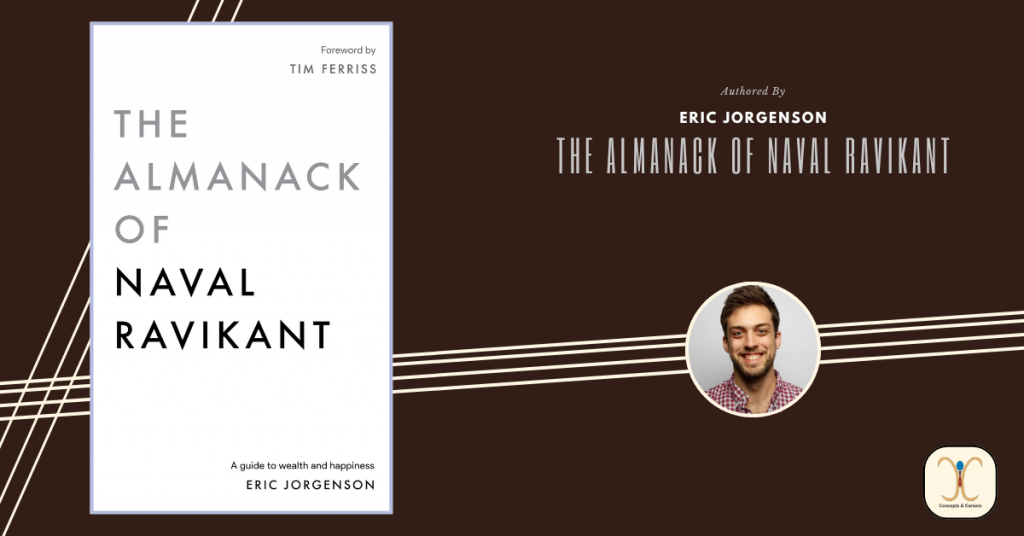
Comprehensive Analysis and Summary of The Almanack of Naval Ravikant: A Guide to Wealth and Happiness
In an era dominated by hustle culture, information overload, and endless pursuits of success, The Almanack of Naval Ravikant by Eric Jorgenson stands out as a rare blend of philosophy, entrepreneurship, wealth creation, and inner peace. Built around the insights and wisdom of Naval Ravikant, the book distills years of tweets, podcasts, interviews, and reflections into a practical guide for building both wealth and happiness.
Unlike conventional business books that focus only on financial success, this book explores a more profound question:
👉 What is the point of wealth if it doesn’t lead to freedom and peace of mind?
The result is a modern philosophical handbook that combines startup thinking, leverage, decision-making, and mindfulness into a timeless framework for living well.
1. The Core Philosophy: Wealth and Happiness are Learnable Skills
One of the most transformative ideas in the book is:
👉 Wealth and happiness are skills—not luck.
Naval challenges the common belief that:
- Wealth is inherited
- Happiness is accidental
- Success is reserved for a select few
Instead, he argues that both can be systematically cultivated through:
- Clear thinking
- Specific knowledge
- Long-term decision-making
- Emotional mastery
This shifts success from fate to strategy and mindset.
2. Defining Wealth Correctly
Naval makes an important distinction:
- Money = Transferable social credits
- Status = A zero-sum social game
- Wealth = Assets that earn while you sleep
This reframing is crucial.
True wealth comes from:
✔ Ownership
✔ Equity
✔ Systems
✔ Scalable assets
Not from:
❌ Trading time for money endlessly
This philosophy aligns deeply with modern startup ecosystems and digital businesses where leverage and scalability define outcomes.
3. The Power of Specific Knowledge
One of Naval’s most cited concepts is Specific Knowledge.
What is Specific Knowledge?
Knowledge that:
- Cannot easily be taught
- Comes naturally to you
- Is developed through curiosity and experience
Examples:
- Creative thinking
- Product intuition
- Storytelling
- Systems design
Naval argues:
👉 Society rewards originality, not conformity.
Traditional education often trains people for compliance, while wealth creation rewards:
- Creativity
- Unique insight
- Judgment
For founders, creators, and innovators, this idea is especially powerful:
✔ Build around your natural strengths
✔ Don’t compete where you lack uniqueness
4. Leverage: The Multiplier of Modern Wealth
According to Naval:
👉 Wealth creation today depends on leverage.
He identifies four types of leverage:
1. Labor
Using people’s time
2. Capital
Using money to make money
3. Code
Software and technology
4. Media
Content, audience, and brand
The most powerful forms today are:
✔ Code
✔ Media
Why?
Because they scale infinitely with low marginal cost.
This insight is highly relevant in:
- AI-first businesses
- Creator economy
- SaaS platforms
- Digital products
5. Accountability and Long-Term Thinking
Naval strongly emphasizes:
👉 “Play long-term games with long-term people.”
This principle applies to:
- Relationships
- Business
- Investing
- Personal growth
He argues that:
- Reputation compounds
- Trust compounds
- Consistency compounds
This is a direct counter to short-term optimization culture.
6. Happiness: The Inner Game
The second half of the book focuses on happiness—not as pleasure, but as peace.
Naval defines happiness as:
👉 A state of acceptance and inner calm.
He argues that:
- Desire creates suffering
- Comparison destroys peace
- The mind constantly seeks external validation
This connects deeply with philosophical traditions like:
- Stoicism
- Buddhism
- Mindfulness practices
7. The Problem with Desire and Status
One of the most profound insights in the book:
👉 “Desire is a contract you make with yourself to be unhappy until you get what you want.”
Naval warns against:
- Endless comparison
- Status competition
- External validation
Status games are inherently:
- Competitive
- Exhausting
- Never-ending
Meanwhile, wealth creation can be collaborative and abundant.
8. Meditation, Awareness, and Mental Clarity
Naval repeatedly emphasizes the importance of:
✔ Meditation
✔ Solitude
✔ Reflection
Why?
Because clarity comes from stillness.
In a world of:
- Notifications
- Information overload
- Constant stimulation
Mental clarity becomes a superpower.
Naval views meditation not as spirituality alone, but as:
👉 Mental training for awareness and emotional regulation.
9. Decision-Making and Judgment
A recurring theme is:
👉 Judgment > Hard Work
Naval argues that:
- Smart decisions outperform brute force effort
- Leverage amplifies judgment
- Clear thinking creates asymmetric outcomes
This is particularly relevant for:
- Investors
- Entrepreneurs
- Leaders
The highest leverage skill:
✔ Independent thinking
10. Building a Meaningful Life
Naval’s framework for life is remarkably simple:
- Do work that feels like play
- Build leverage
- Own equity
- Seek inner peace
- Eliminate unnecessary desires
This is not about retirement—it is about:
👉 Designing a life aligned with your values.
11. Applications in the Modern Economy
The book’s ideas are especially powerful in today’s environment:
AI Economy:
- Code leverage becomes exponential
Creator Economy:
- Media leverage creates scalable influence
Entrepreneurship:
- Ownership beats employment
Personal Branding:
- Authenticity compounds trust
For builders and operators, the takeaway is clear:
👉 Build systems that scale without linear effort.
12. Criticism and Balanced Perspective
While inspiring, the book has limitations:
- Some ideas are abstract
- Execution challenges are understated
- Not all advice applies universally
However, its value lies in:
✔ Clarity of thought
✔ Philosophical depth
✔ Strategic perspective
Conclusion: Wealth is Freedom, Happiness is Peace
The Almanack of Naval Ravikant is more than a business book—it is a guide to intentional living.
Naval Ravikant presents a vision where:
- Wealth creates freedom
- Freedom enables peace
- Peace becomes the ultimate success
In a world obsessed with speed, noise, and external achievement, the book offers a radically different perspective:
👉 Build wealth quietly.
👉 Think independently.
👉 Live intentionally.
👉 Seek peace over validation.The ultimate takeaway:
✔ Wealth is not about money alone.
✔ It is about owning your time, mind, and life.