- Have any questions?
- info@conceptsandcareers.com


Decoding Consumer Minds: A Strategic Deep Dive into “The Psychology of Marketing” by Harinder Singh Pelia

Helium: The People’s Network That Tried to Decentralize Telecom
April 16, 2026
Acai Theory: Reimagining Healthy Eating as an Experience, Not a Compromise
April 23, 2026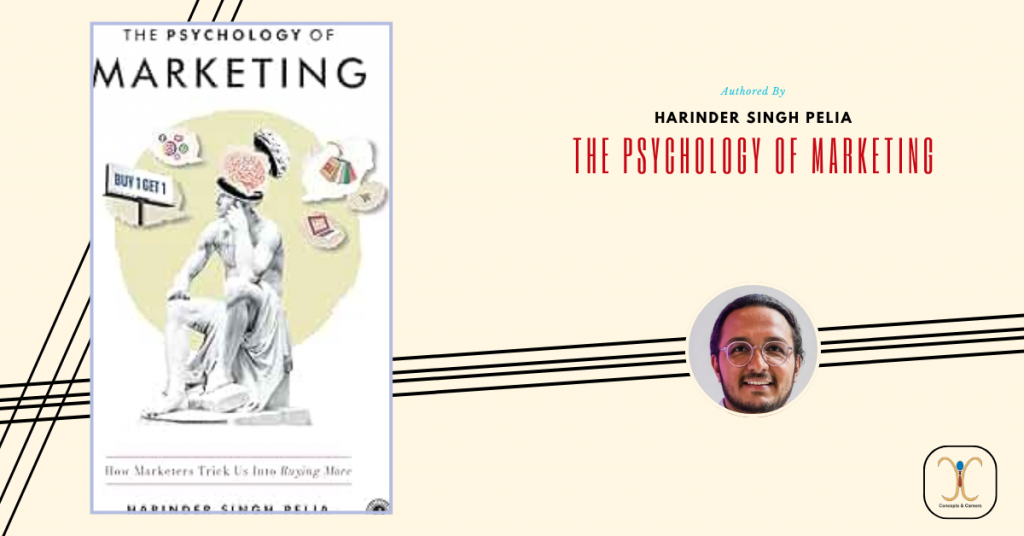
Comprehensive Analysis and Summary of The Psychology of Marketing by Harinder Singh Pelia
In today’s hyper-competitive digital economy, marketing is no longer just about visibility—it’s about influence, perception, and behavior. In The Psychology of Marketing, Harinder Singh Pelia explores the cognitive, emotional, and behavioral triggers that drive consumer decisions. The book bridges the gap between traditional marketing tactics and modern psychological insights, offering a practical framework for marketers, entrepreneurs, and business leaders.
At its core, the book argues a powerful idea:
👉 People don’t buy products—they buy feelings, beliefs, and outcomes.
This article provides a comprehensive, strategic, and analytical breakdown of the book’s key concepts, along with real-world applications for modern businesses.
1. The Foundation: Understanding Consumer Psychology
Pelia begins by establishing that marketing is fundamentally rooted in Psychology. Every purchase decision is influenced by:
- Emotions
- Perceptions
- Cognitive biases
- Social influences
Consumers are not always rational decision-makers. Instead, they rely on mental shortcuts (heuristics) to make quick decisions.
👉 Strategic Insight:
The best marketers don’t just sell—they shape perception and reduce decision friction.
2. Emotional Drivers of Buying Behavior
One of the most powerful sections of the book explores emotional triggers.
Pelia highlights that emotions like:
- Fear
- Desire
- Trust
- Belonging
- Status
…are central to purchasing decisions.
For example:
- Fear drives insurance purchases
- Desire drives luxury consumption
- Belonging drives community-based brands
Application:
Modern brands (especially D2C and digital-first) win by:
✔ Building emotional narratives
✔ Creating identity-based positioning
✔ Connecting beyond features
3. Cognitive Biases and Decision-Making
Pelia dives deep into how cognitive biases influence consumer behavior. Some key biases include:
1. Social Proof
People follow what others are doing.
2. Scarcity Effect
Limited availability increases perceived value.
3. Anchoring
The first price seen influences perceived value.
4. Reciprocity
People feel compelled to return value.
5. Authority Bias
Consumers trust experts and credible figures.
👉 These principles align closely with concepts popularized in Influence: The Psychology of Persuasion.
Strategic Takeaway:
Marketing is not manipulation—it is structured influence based on predictable human behavior.
4. The Role of Perception in Branding
Perception is reality in marketing.
Pelia emphasizes that:
- A product is not defined by what it is
- It is defined by how it is perceived
This leads to:
- Premium positioning
- Brand storytelling
- Differentiation strategies
Example Insight:
Two identical products can command vastly different prices based on perception.
👉 Strategic Insight:
Branding is not design—it is psychological positioning.
5. The Power of Storytelling
Storytelling is presented as a key tool for emotional engagement.
Why stories work:
- They are memorable
- They create emotional connection
- They simplify complex ideas
Pelia explains that effective marketing narratives:
- Position the customer as the hero
- Position the brand as the guide
- Highlight transformation
This aligns with modern content strategies:
- Personal branding
- Social media storytelling
- Video-first marketing
6. Attention Economy and Modern Marketing
In today’s digital landscape:
- Attention is scarce
- Content is abundant
- Competition is intense
Pelia highlights that winning attention requires:
✔ Simplicity
✔ Relevance
✔ Emotional resonance
This connects strongly with ideas from Gary Vaynerchuk around attention arbitrage.
Strategic Takeaway:
👉 Marketing today is not about reach—it is about capturing and holding attention.
7. Trust and Credibility: The New Currency
Trust is one of the most critical psychological factors in marketing.
Pelia outlines how trust is built through:
- Consistency
- Transparency
- Social proof
- Authority positioning
In the era of:
- Fake news
- Over-advertising
- Low attention spans
👉 Trust becomes a competitive advantage.
8. Consumer Journey and Decision Triggers
The book also explores how psychological triggers operate across the customer journey:
Awareness Stage:
- Curiosity
- Emotional hooks
Consideration Stage:
- Social proof
- Authority
Decision Stage:
- Scarcity
- Urgency
- Guarantees
Post-Purchase:
- Validation
- Community
👉 Insight:
Each stage requires a different psychological lever.
9. Digital Marketing and Behavioral Design
Pelia extends psychological principles into digital environments:
- UI/UX design influences decisions
- Color psychology impacts perception
- Copywriting drives action
For example:
- Red → urgency
- Blue → trust
- Green → growth
This is highly relevant for:
- SaaS platforms
- E-commerce
- AI products
👉 Strategic Insight:
Digital experiences are not just functional—they are behavioral systems.
10. Applications for Entrepreneurs and Businesses
From a founder/operator perspective, the book translates into a clear framework:
Step 1: Understand Your Audience
- What do they fear?
- What do they desire?
Step 2: Build Emotional Positioning
- What identity does your brand represent?
Step 3: Use Psychological Triggers
- Social proof
- Scarcity
- Authority
Step 4: Optimize Customer Journey
- Reduce friction
- Increase clarity
Step 5: Build Trust Systems
- Reviews
- Testimonials
- Transparency
11. Critique and Balanced Perspective
While the book is practical:
- Some concepts may feel familiar to experienced marketers
- Depth in certain areas could be expanded
However, its strength lies in:
✔ Simplicity
✔ Applicability
✔ Strategic clarity
Conclusion: Marketing is Psychology in Action
The Psychology of Marketing by Harinder Singh Pelia reinforces a fundamental truth:
👉 People don’t buy logically—they justify emotionally.
In a world driven by:
- AI
- Data
- Automation
The human mind remains the ultimate battleground.
The brands that win will be those that:
- Understand behavior
- Influence perception
- Build trust
- Create emotional resonance
Marketing is no longer about selling.
It is about understanding and shaping decisions.