- Have any questions?
- [email protected]


Unlocking Growth: A Strategic Deep Dive into “Unlocking the Customer Value Chain” by Thales S. Teixeira

Cropcoin (Pehle Jaisa): Rebuilding India’s Soil, One Waste Stream at a Time
April 1, 2026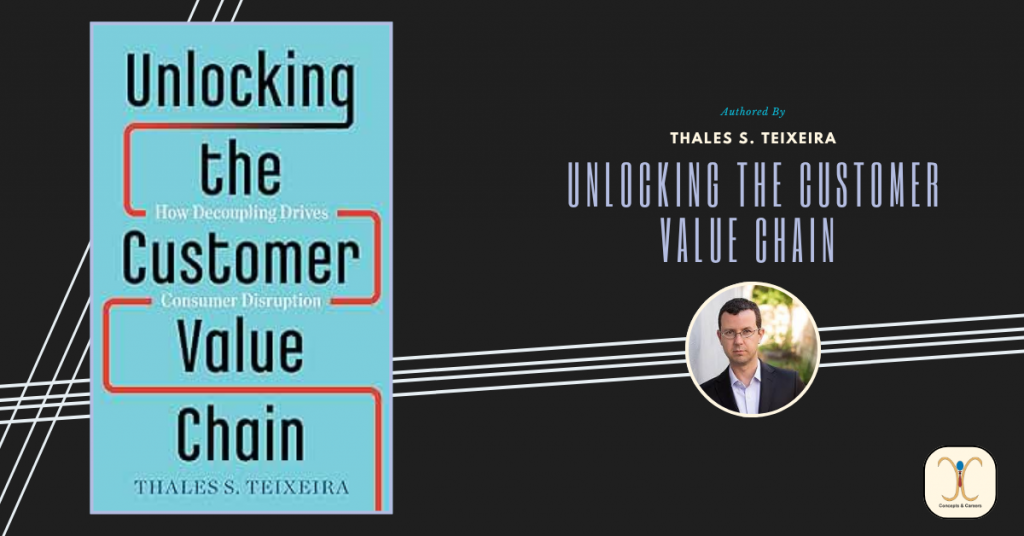
Comprehensive Analysis and Strategic Summary of Unlocking the Customer Value Chain by Thales S. Teixeira
In today’s hyper-competitive and digitally disrupted marketplace, traditional competitive advantages are eroding faster than ever. Products are commoditized, distribution is democratized, and customer loyalty is fragile. In this landscape, Thales S. Teixeira introduces a powerful framework in Unlocking the Customer Value Chain—one that shifts the focus from products and companies to customer journeys and value capture points.
This book is not just a theoretical exploration; it is a strategic playbook for entrepreneurs, operators, and leaders looking to identify untapped opportunities within existing markets. It challenges a fundamental assumption:
👉 You don’t need to build a better product—you need to capture value better.
1. The Core Idea: Competing for Customer Value, Not Just Market Share
Teixeira introduces the concept of the Customer Value Chain (CVC)—a sequence of activities that customers go through when they discover, evaluate, purchase, use, and share a product or service.
Traditionally, companies compete by improving their offerings within a specific segment of this chain. However, Teixeira argues that the real opportunity lies in:
- Identifying pain points or inefficiencies in the customer journey
- Extracting value by solving those pain points better than incumbents
This approach reframes competition:
- From product-centric → customer-centric
- From industry boundaries → journey-based opportunities
2. Breaking Down the Customer Value Chain
The Customer Value Chain typically includes stages such as:
- Awareness – How customers discover a product
- Consideration – How they evaluate options
- Purchase – The transaction experience
- Usage – The actual consumption of the product
- After-sales / Sharing – Reviews, referrals, retention
Each stage represents a value capture opportunity.
Teixeira emphasizes that disruption often occurs when a company:
✔ Focuses on one stage
✔ Dramatically improves it
✔ Captures disproportionate value
3. The Strategy of “Value Chain Disruption”
One of the most powerful ideas in the book is Value Chain Disruption.
Instead of building end-to-end solutions, successful disruptors:
- Target specific friction points
- Remove inefficiencies
- Deliver superior customer experience
Examples (conceptual understanding):
- Reducing search friction
- Simplifying decision-making
- Enhancing convenience
This aligns strongly with modern startup thinking:
👉 Solve one painful problem exceptionally well → expand later
4. The Rise of “Decoupling” Strategy
Teixeira introduces the concept of decoupling, which is central to modern disruption.
What is Decoupling?
Decoupling occurs when a new entrant:
- Breaks apart a traditional customer value chain
- Focuses on one activity
- Executes it significantly better
This allows them to:
- Capture value
- Undermine incumbents
- Build entry points into markets
For example:
- Instead of owning the entire experience, a company may dominate just discovery, or just transactions.
Strategic Insight:
👉 The future belongs to companies that unbundle value chains intelligently.
5. Why Incumbents Fail to Respond
A critical part of the book explains why large companies fail to adapt.
Teixeira highlights three key reasons:
1. Customer Misunderstanding
Incumbents focus on internal metrics rather than real customer pain points.
2. Business Model Inertia
Even when they recognize disruption, they struggle to respond because:
- It cannibalizes existing revenue
- It conflicts with current structures
3. Over-Reliance on Product Innovation
They assume better products will win, ignoring experience and convenience.
6. The Power of Customer-Centric Thinking
Teixeira’s framework reinforces a shift toward:
👉 Customer-first strategy design
This means:
- Mapping the full customer journey
- Identifying friction points
- Designing interventions
For modern businesses (especially in AI, SaaS, and digital ecosystems), this translates into:
- UX-led innovation
- Data-driven personalization
- Experience optimization
7. Application in the Digital Economy
In today’s landscape:
- Attention is fragmented
- Switching costs are low
- Customer expectations are high
Teixeira’s ideas become even more relevant.
Key Applications:
1. Creator Economy
- Value lies in attention capture (top of funnel)
2. SaaS & AI Products
- Value lies in ease of onboarding and usage
3. Marketplaces
- Value lies in matching efficiency and trust
4. D2C Brands
- Value lies in storytelling and community
👉 The competitive edge is no longer “what you sell” but how you fit into the customer’s journey.
8. Strategic Framework for Entrepreneurs & Leaders
From a founder/operator perspective, Teixeira’s book can be translated into a practical framework:
Step 1: Map the Customer Journey
Break down every step your customer takes.
Step 2: Identify Friction Points
Where is time wasted? Where is confusion created?
Step 3: Evaluate Value Pools
Which step has the highest willingness to pay?
Step 4: Decouple and Dominate
Focus on one stage and deliver 10x improvement.
Step 5: Expand Strategically
Once dominance is established, move across the chain.
9. The Intersection with Modern Strategy Thinking
Teixeira’s framework aligns with several modern strategic philosophies:
- Blue Ocean Strategy → Creating uncontested spaces
- Lean Startup → Iterative problem-solving
- Platform Thinking → Capturing value across interactions
- AI-first Businesses → Optimizing micro-interactions
For someone building scalable ventures (like your work across JW Infotech, NexusTeq, etc.), this is especially relevant:
👉 It’s about identifying where value leaks—and capturing it.
10. Critique and Balanced Perspective
While powerful, the framework has some considerations:
- Over-fragmentation can weaken brand identity
- Not all industries allow easy decoupling
- Execution still depends on strong fundamentals
However, as a strategic lens, it is highly valuable.
Conclusion: Strategy is No Longer About Products—It’s About Positioning in the Journey
Unlocking the Customer Value Chain by Thales S. Teixeira reframes how we think about competition and growth.
It shifts the focus from:
- “What should we build?”
👉 to - “Where can we create and capture value in the customer journey?”
In a world driven by:
- Digital transformation
- AI-driven personalization
- Experience-first consumption
This mindset is not optional—it is essential.👉 The winners of the next decade will not be those who build the best products.
👉 They will be those who understand the customer journey best—and own the most valuable parts of it.